Wholly Cow
Founder of Lo & Slo, creating fire food and award-winning sauces and seasonings, Emily McCorkell takes the temperature of your beef steaks on the grill, from blue to – don’t tell chef – well done
When I moved to Ireland from America nearly 20 years ago, I was a quasi-vegetarian, mostly carbs and veg, with a little poultry or fish occasionally – ok, and a little bacon, well, because… bacon.
But I didn’t eat beef. I actually hated the taste, texture, and smell of it. It was only when I then moved to Northern Ireland that I started craving beef. Was it the lack of sunshine, having moved from California to rainy Derry City? Maybe. Or perhaps it was the incredible farm-to-fork quality that Irish farms champion? And so, in the winter of 2005, I began craving beef and it led me to discover the most incredible farms and cattle.
Fast forward to 2018, and this journey gave me the chance to understand and discover the difference that slow farming makes to food across this green island. And having a barbecue business meant I had to do a little quality testing with all this wonderful produce, right?
My husband, Norm, and I began looking into cattle breeds, size of abattoirs, and experimenting with different cuts of meat. We realised many butchers were buying their cuts of meat from the same large abattoirs and that didn’t sit right with us. Moving many animals through these large processing plants can spike cortisol in the animal. Not only unkind to the animal, but the spike of cortisol before slaughter can change the taste and texture of the beef. Furthermore, in these large abattoirs, there’s no guarantee that the grass-fed cow you’ve purchased to be butchered is the same cuts you’re walking away with in the end.
So we began asking around, firstly about retired dairy cows, since we smoke for a living. Many of these tougher, older muscles require a slower, lower cook to break down the tissue to a tender state, which is perfect for smoking, but we didn’t have the space to purchase a whole cow. And we couldn’t find a farmer who would sell us even a portion of a retired dairy cow when they could make exponentially more selling it for mince or dog food. So, we kept looking.
We met David and Sandra Scott recently through a mutual friend, Ilse van Staden. Ilse is an extremely talented butcher who is incredibly passionate about food provenance and, being South African, started Ke Nako, a biltong business. Visiting her one day at her farm shop and butchery, she told us about David and Sandra and their cows. They started a business not long ago farming a particularly rare breed of cattle, the Irish Moiled.
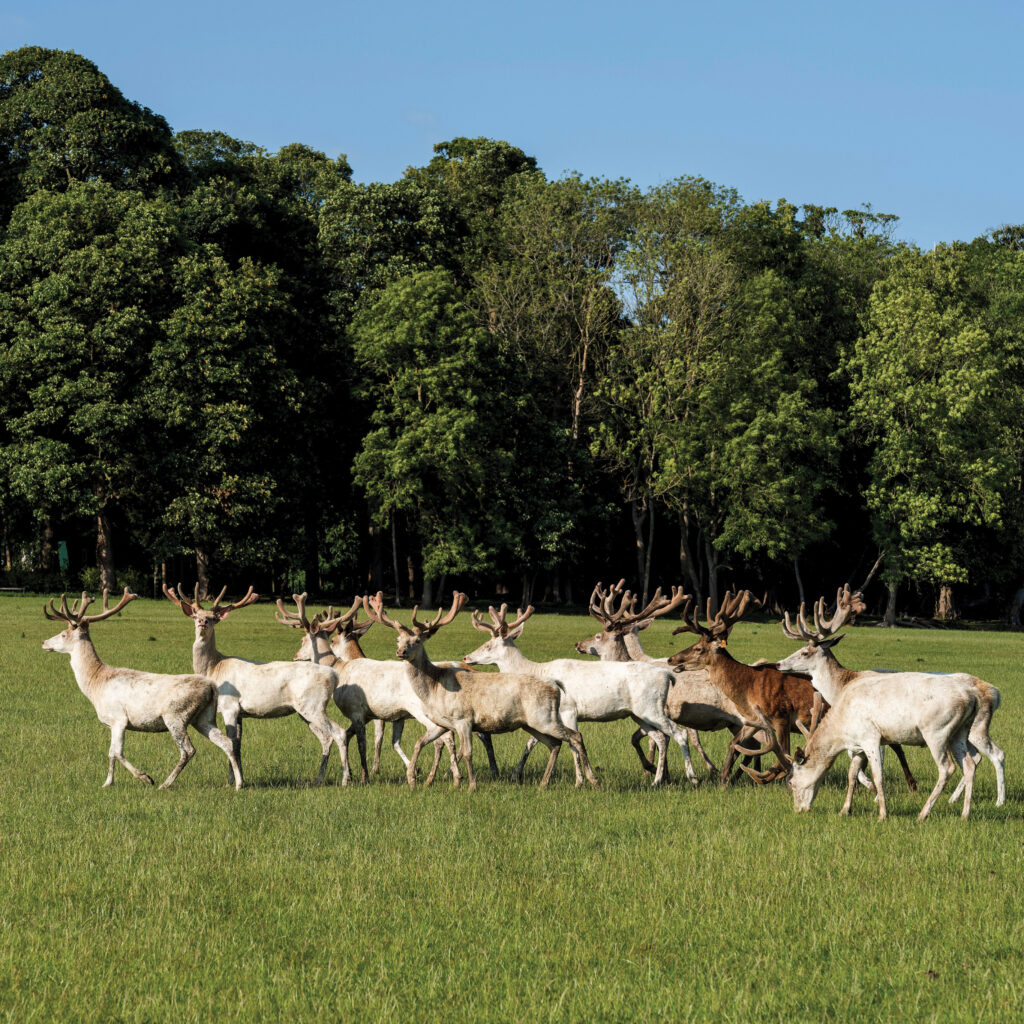
“We are a small family farm, near the north coast raising Irish Moiled cattle. Irish Moiled cattle are endangered and the only surviving breed native to the north of Ireland. We love our Moilies and take great care in having high welfare standards while being environmentally conscious,” says Sandra. “Our grass-fed cattle roam and forage all year round and slowly mature at a natural pace. We find this makes amazing beef that is rich in flavour and colour and gorgeously marbled.”
The Scotts care deeply about the cattle and the environment; both essential to the end product. So strong is the flavour, the beef is almost gamey in taste, tender and delicious. We use it exclusively for our new Wild & Fired BBQ School, where we focus on getting people interacting with their food and fire while understanding food provenance. Finding cuts like this was our game-changer.
So is that it? Find a quality cut of beef and cook it to your liking? Well, not really. Finding a quality, grass-fed cut of beef is only half the battle. How many times have you had an overcooked sirloin or an undercooked chuck steak?
This is where muscle matters. The different cuts of meat are taken from various parts of the cow and where they’re taken from will dictate how they should be cooked. At our BBQ school we’ve created a meat cheat sheet that doesn’t organise the beef by cut, but by your preference of doneness according to internal temperature.
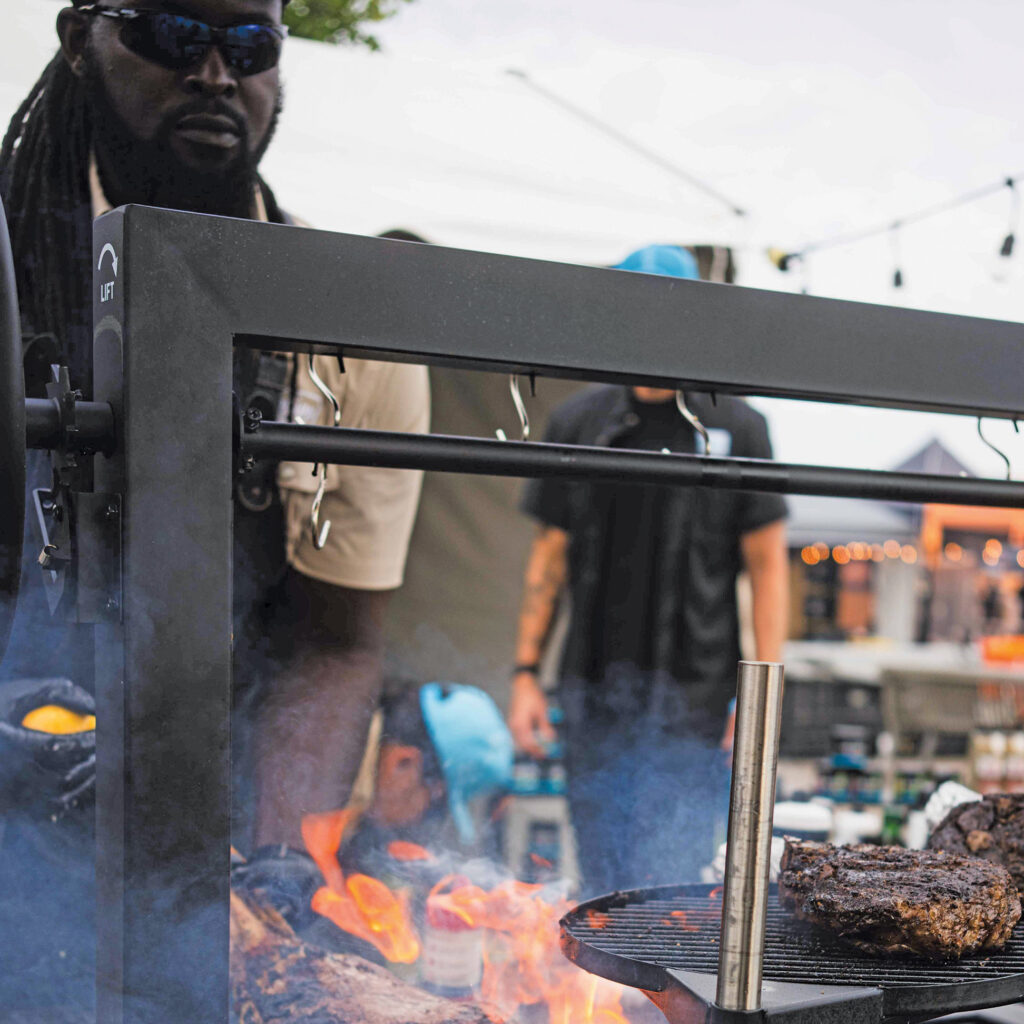
• A blue steak is a treat when done right and when using the right cut. I like to coat the steak in tallow and grill hot and fast over open flames. The internal temperature should be a cool 43°C (109°F). Tenderloin, flat iron, and sirloin tip work best for this method.
• Rare is typically hitting 49-54°C (120-129°F) internally and the best steaks for this cook are ribeye, sirloin, T-bone and porterhouse, or even a well-trimmed slab of chuck steak. These meats are tender and season easily, finished with flaky sea salt, local blue cheese, and a drizzle of Chilli Mop Sauce.
• Medium rare is a popular cook, not just for people’s preferences, but is also a versatile cook for a range of cuts. Sirloin, flank, skirt, hanger, flat iron, tri-tip, and tenderloin are only some of the great choices for medium rare, the soft textured bite without the cool red centre making this a perfect all-rounder cook. Aim for 54-57°C (129-135°F) internally.
• Top sirloin and rump are good choices for medium. This light pink centre should be hitting 57-63°C (135-145°F). We sear the beef and keep the steak over medium heat, using indirect heat to avoid charring the outside.
• Medium well is a slightly pink centre that has reached 63-68°C (145-154°F). Chuck eye and top round are some steaks that are ideal for medium doneness as the muscle is tougher. Don’t pass them by just because they need a little more time and attention during cooking – these tougher, overused muscles typically have a stronger, beefier taste. This is where slow cooking to that internal range of 63-68°C (145-154°F) will give you that tender, beefy result. Marinades and natural tenderisers won’t hurt here either.
• Well done steaks get a bad rap, and often for good reason. Typically, customers in restaurants will pick a tender steak from the menu, request it well done, then complain that the steak was dry and tough and decide to not go back to that restaurant. Only certain cuts should be well done, reaching an internal temperature of 68-71°C (154-160°F) minimum. These cuts will naturally be drier when cooking as a steak, so using a marinade is key. Or choose to keep the cut as a roast and cook low and slow for a juicy, flavoursome result. Sear the outside of the meat to increase the Maillard reaction and lock in the natural juices. Transfer to indirect heat or a smoker to heat the roast slowly. The connective tissues break down to create a silky, fatty gloss.
So next time you’re grilling or smoking, think about not just the quality of your steaks, but cooking each steak according to how it should be cooked.