Pit Talk with Rasheed Philips
The backyard spark that reached Memphis. US correspondent Rasheed Philips headed to Tennessee for the Open Fire Meat Up
For most of the year, Memphis in May is the kind of event you can describe in familiar categories: teams, trophies, tents, smoke, and that long walk to the main stage that can feel like a runway if you are carrying momentum, or a marathon if you are carrying doubt.
But, this year, something happened that did not fit neatly into the old vocabulary.
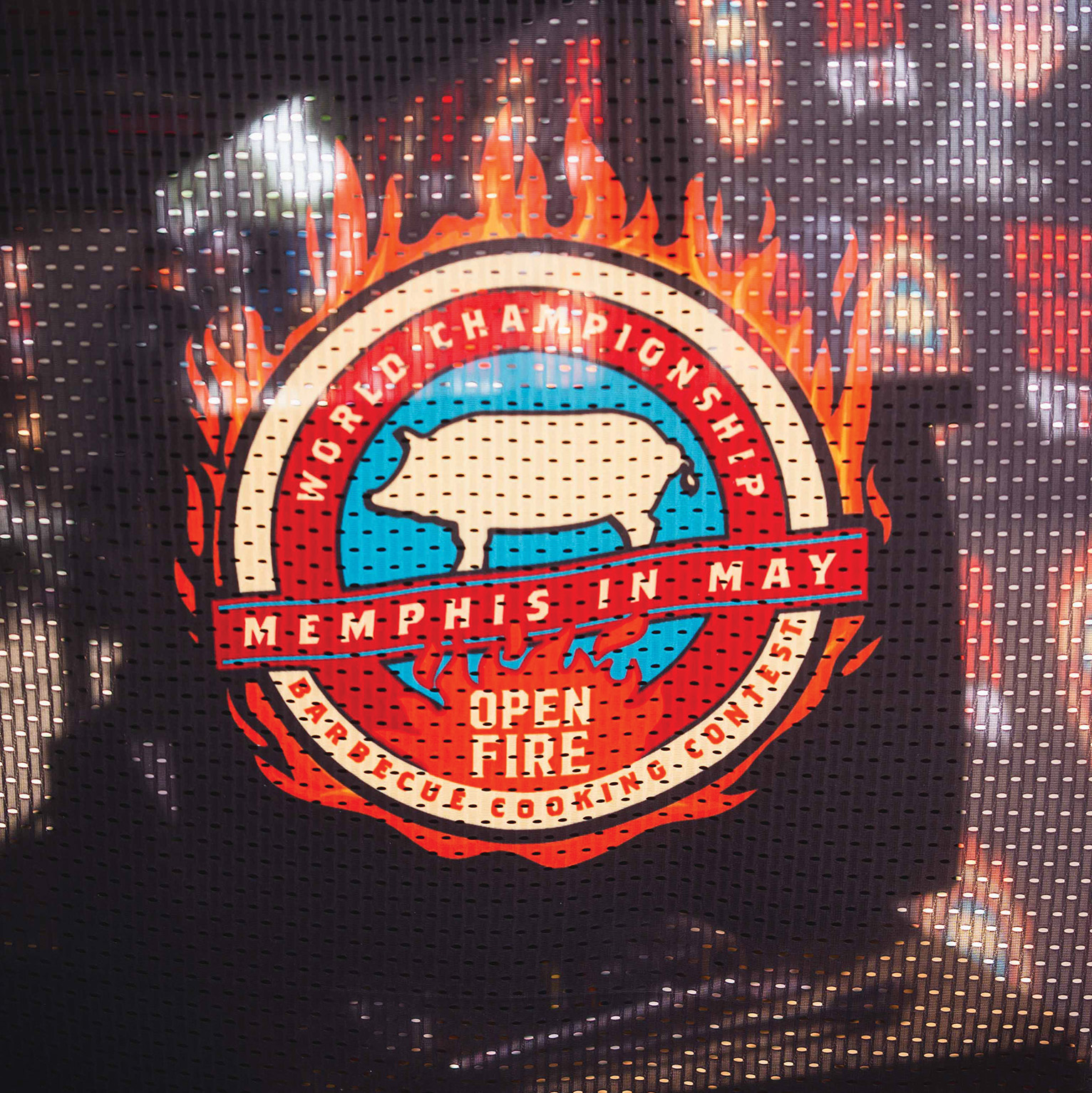
For the first time, the Open Fire Meat Up made its way to Memphis and brought an entirely new experience into the festival, one that felt less like a new ‘section’ and more like a new language being spoken out loud in the middle of a tradition.
I came into it knowing I was about to see great cooking. I did not realise I was about to watch a community turn a spark into a milestone.
It started, as so many meaningful things do, in a backyard. The story is simple on paper: Argentine pitmaster Al Frugoni, now a BBQ legend in Texas, began with about 20 of his friends who were live-fire cooks, and that gathering grew into a massive experience in Hondo.
This year, it hit the national stage in Memphis, Tennessee, with teams travelling in from across the world, Germany, Ireland, Australia, Mexico and much further, all to compete for the first Open Fire World Championship. In practice, it felt bigger than that.
Because the energy in the Open Fire area was palpable, and not just because flames were everywhere. It was the sense that people were watching something take shape in real time.
Most of us had been to at least one of the Open Fire Meat Ups in Hondo, Texas – pushed through the heat, worked the long nights and early mornings to offer an experience to those who travelled into the small town.
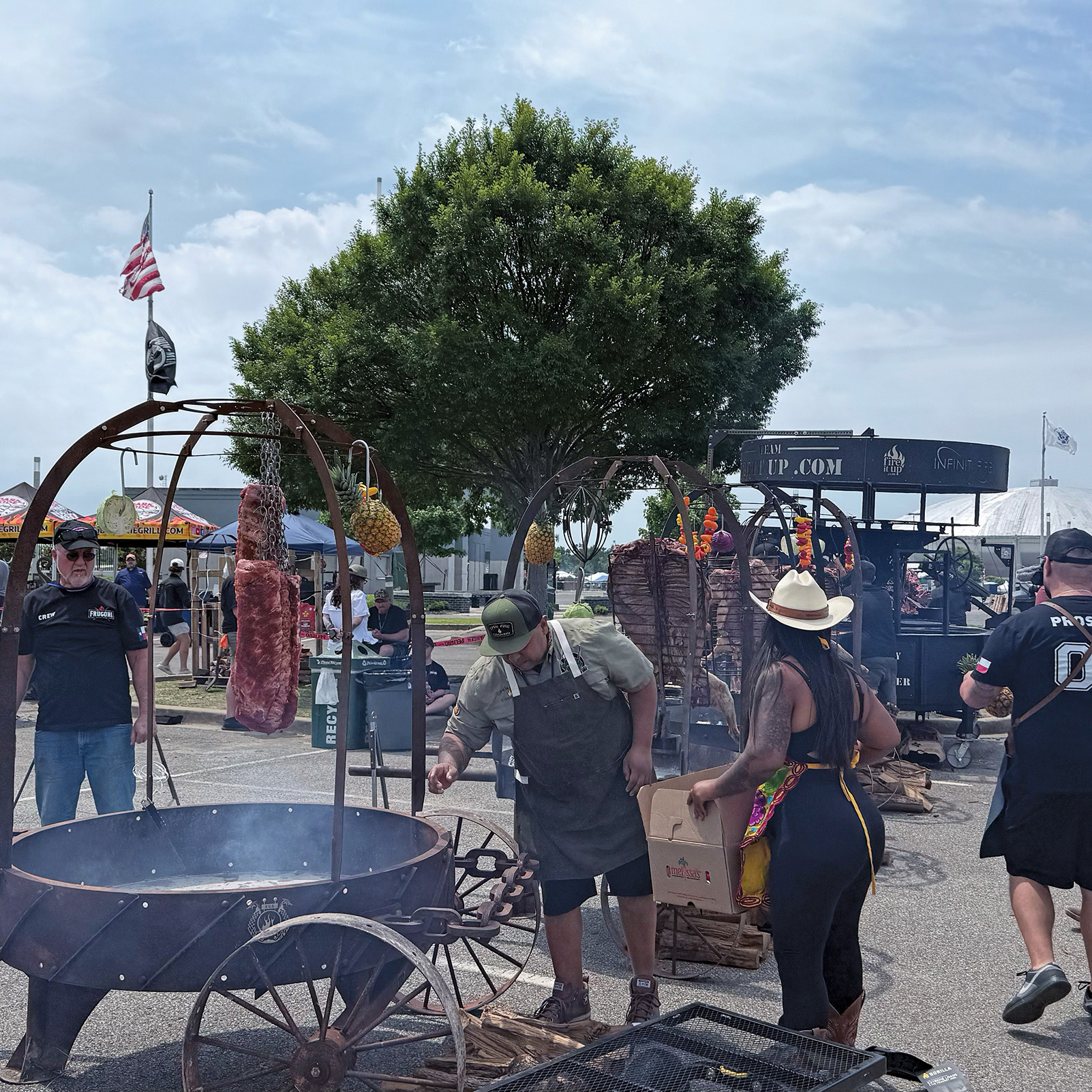
We were all amazed to see what the backyard gathering had grown into. These contestants were not cooking on smokers or grills. They were cooking with true open-fire techniques and equipment, skewers, asado crosses, even towering metal rigs rotating large cuts of meat around flames.
You could feel it in the way people stopped walking. Not the casual slow-down you see when someone is scanning vendor signs, but a hard pause; the kind you only get when a person sees something they did not know was possible.
There is a difference between watching food cook and watching technique perform. Open fire is honest like that.
It is exposed, there’s no closing the lid to hide a dry rib, or not fully cooked brisket. It’s a spectacle and discipline at the same time.
And then there is Al Frugoni. If you spend any time around him, you will notice the same thing I have. He is humble in a way that makes people want to work harder – not for him, but with him. Al joked that he is not famous or important, he just happens to have everyone’s phone number.
That line lands because it is funny. It also lands because there is truth behind it. My own response was simple: not everyone answers when you call. But when Al calls, I answer, and so do a lot of other folks, not just out of respect, but out of admiration and love for what it represents when people unify over fire.
That is the true, deeper story running under the flames. This was not an ‘exhibition’; there was no ‘stunt cooking’. The teams were not there to pick up participation trophies and head home. They were fighting for the chance to walk across the Memphis in May main stage, and they did.
It matters that it was the first year in Memphis, because first years usually look like first years. You expect rough edges. You expect confusion. You expect a learning curve that shows itself in the seams. And yet, standing there as both a participant and a festival-goer, I can say you would never assume this was year one.
Part of what made it feel established was the support and presence around it. You had brands and partners onsite, and fuel and grill providers set up in their own area, answering questions, providing fuel for teams, and giving the crowd live-fire entertainment that felt integrated into the experience, not stapled onto it as an afterthought.
The other part was the scale of what was being cooked and how it was being cooked.
If you missed it this year, you missed cooking spectacles that are hard to describe until you see them: gyroscopic contraptions slowly cooking large beef plate ribs, full hogs on asado crosses lined up across the arena, even a literal miniature metal Viking boat rig.
That Viking boat detail sticks with me, not just because it is visually wild, but because it captures what open fire invites out of people. Creativity. Play. Engineering. A willingness to build something just because it might work, and because it might make someone stop in their tracks and say: “I have never seen that before.” Might isn’t a guarantee, but it’s all it takes in this world.
To me, that is one of the quiet missions of Memphis in May when it is at its best.
It is not only a contest. It is a culture. It is a public classroom. There was also a real push toward innovation behind the scenes.
A new scoring system debuted through the Live Fire Cooking Association, using an app designed by Mike Starr of Blazing Star, allowing judges to score food in real time and have those scores immediately registered. That kind of detail might sound like logistics, but it matters. In competition barbecue, trust in the process is everything.
When you modernise scoring in a way that is transparent and immediate, you create a cleaner experience for competitors and a stronger foundation for growth. Which brings me to the future.
When I sat with Al and asked what he wanted to see next year, he was clear. He wanted open-fire competitors to have their own ancillary challenges, the way traditional low-and-slow categories do. He even talked about the possibility of open-fire contestants going head-to-head with traditional cookers for a true grand champion prize.
On paper, it sounds ambitious; in context, it sounds inevitable, because this thing has been growing fast, and the Memphis stop was not a detour. It felt like a new chapter in the book.
The Open Fire Meat Up in Hondo is approaching its sixth year, and on the eve of that milestone, it found its way to Memphis to be officialised and immortalised in a new way.
When I told Al he was going down in history, the realisation seemed to catch him off guard. He did not posture. He did not soak it up. If anything, it looked like he was still processing how something that started in his backyard ended up on a stage with global teams and an entire city watching.
I respect that. Because while this was never a one-man event, it is hard to ignore the spark that started it. And what made me proud to witness it in Memphis is that the spark did not turn into ego; it turned into a community.
That was the loudest message of the weekend. As hot as the flames burned, the spirit behind every turn-in and every team burned even brighter.
In the end, it did not feel solely like a competition. It felt like craft and community, put on display for anyone willing to stop and pay attention.
More than 50,000 people attended the Open Fire Experience at Memphis in May, watching international pitmasters cook whole animals, before tasting the live fire dishes. The first ever Open Fire World Championship saw 20 teams from seven countries compete over 24 hours, with
The Culinary Charm team and Emma Cristina Velazquez Nguyen crowned world champions.